OK, let’s skip the clutter and get it out of the way early. You know who "Hulk" and Bruce Banner are. You know why the mild-mannered scientist becomes what he becomes, who his favorite female friend in the whole world is and what her father thinks of their attachment to each other. You’d read Stan Lee’s Marvel comic book origins a million times before, loved (or hated if you’re my former best friend Rich) the changes TV producer Kenneth Johnson did to the premise in his "Incredible Hulk" Network TV adaptation of the late 70’s/early 80’s and anticipated for years the release of this 2003 big-budget summer movie adaptation. Now that he’s seen it a few more times in the comfort of his own home this reviewer can’t help (try as he might) to compare It with the "Incredible Hulk" DVD Box Set released this week (seven days before "Hulk’s" official October 28th release) and which we’ll be reviewing on Sunday. There is such a vast
discrepancy between the vision and limited dated effects of the CBS TV series and the $135+ million special effects budget at the hear of Ang Lee’s motion picture.
And you know what? I can’t help but be angry. Not "Hulk"-type angry, mind you, but the type of anger a cinema lover feels when he watched Ted Turner colorize classic b&w movies in the 1980’s. Or when studios decide to do remakes of good old movies ("Psycho," "Sabrina," "The Texas Chainsaw Massacre," etc.) instead of the many bad one’s that didn’t work the first time out. I’m angry that the origins of Bruce Banner’s genetic mutation (an accident involving Gamma radiation that altered his body chemistry) have been radically altered in order to accommodate the increased importance in the movie’s storyline of Bruce’s father, Dr. David Banner (named after the character Bill Bixby played in the aforementioned CBS TV series). It was one thing to alter an ancillary detail like the origins of Peter Parker’s spider web in 2002’s "Spiderman." It’s another thing entirely to alter a detail as important as the genetic make-up of the Bruce Banner character since birth; it turns the eventual accident with Gamma radiation that eventually unleashes the Hulk creature within Banner into a simple plot device instead of the devastating accident of chance it was on both the comic book and the live-action TV series.
I’m also angry that the cameo by original TV Hulk Lou Ferrigno (playing a security guard alongside Stan Lee) is an insignificant couple of seconds; watch the Deleted Scenes section in Disc 1 to see an additional cameo (with dialogue!) from Ferrigno involving a certain type of dog featured prominently in the film. I’m angry that the suits at Universal listened to fan feedback of the Marvel comic book character when drafting the screenplay and work-in-progress versions of the movie (something "Hulk" producers bragged about in "Entertainment Tonight"-type shows as well as a Sci-Fi Channel TV special). When the Hulk speaks a couple of utterly stupid and inane lines during conveniently written Bruce Banner dream/nightmare scenes you can tell someone injected by-committee decision making into director Ang Lee’s personal vision of the film. And I’m really, really, REALLY angry that the aforementioned Mr. Lee dangles frequently throughout the film brief glimpses (via scattered scenes like the return home in Ch.19) into a different type of movie than the freak show "Hulk" eventually descends into.
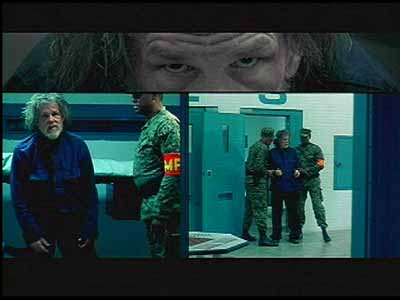
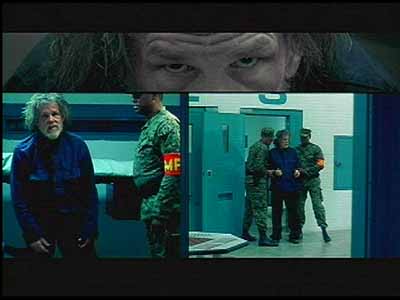
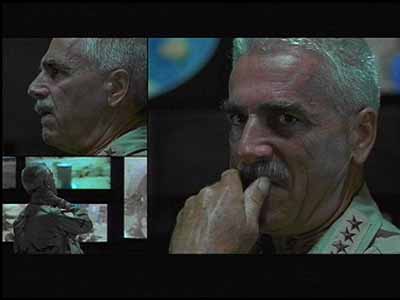
This vision of Lee could have dealt with the heartbreak, emotional turmoil and utter tragedy that David Banner’s blind pursuit of genetic manipulation nirvana imposes upon every other character in the film (General Ross, his daughter Betty, Bruce’s mother Edith, Bruce himself, etc.) throughout several decades. When Bruce confesses to girlfriend Betty that he likes the feeling of out-of-control strength his metamorphosis causes it’s an interesting psychological avenue worthy of exploration (as the comic book has done often throughout the years). Instead the man that gave us a flawed 1970’s family falling apart ("The Ice Storm") and made us believe average men/women in ancient Japan could fly ("Crouching Tiger, Hidden Dragon") allows an unconvincing Computer Generated green character to run amok without much rhyme or reason for being. Lee’s love affair with useless split-screen framing also distracts more than helps; it makes the simple transition wipes between scenes in George Lucas’ "Star Wars" movies seem thoughtful and sedate by comparison. How does it enhance the story to see military helicopters transporting Banner to a desert base from 35,876 different angles (Ch.17)? Even if it’s meant to just look cool and like a comic book page layout, the overkill with which director Lee engages in his multiple-screen layouts eventually renders the gimmick a perpetual annoyance.
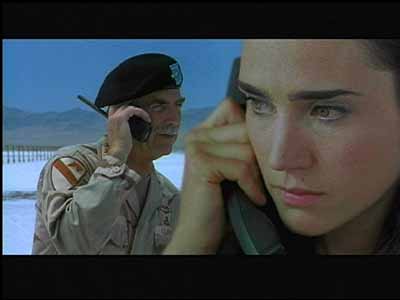
Eric Bana’s bland portrayal of the tormented Dr. Banner stands on the opposite end of Nick Nolte’s wild screaming rants as his nuttier-than-Donald Rumsfeld dad. These two actors don’t click together at all (as either actors or characters) and utterly fail to make either Banner (father and son) remotely interesting beyond their two-dimensional exteriors. Paul Kersey’s portrayal of a younger, slightly-mad-and-getting-worse Dr. David Banner than the old one portrayed by Nolte is actually much more believable and in tune with the character’s ongoing madness. Jennifer Connelly is just pretty window dressing in 95% of her scenes; thankfully the scientific mumbo jumbo the Academy Award-winning actress is forced to utter at the start of the movie (laughable!) is kept to a minimum. Only Sam Elliot (General Ross) and Josh Lucas (Talbot) seem to get that they’re in comic book adaptation, and dial-up their performances accordingly. Elliot, in particular, hits all the right notes as both a military man that places duty above family and a concerned father. His last scene together with Connelly (Ch. 30, after the movie’s extremely OTT and "Akira"-like action finale) is the only one in the entire film that is drenched with sincere pathos and emotion. Even director Lee’s split-screen gimmick actually works here to illustrate the vast gap (physical as well as emotional) that has driven Betty and her father further apart; it’s the only moment that made yours truly as teary-eyed as many of the better moments from Kenneth Johnson’s "Incredible Hulk" TV series.
Fans of the original Hulk comic book will enjoy seeing their super-strong hero perform the types of stunts that the Johnson’s TV adaptation actively avoided. And, in a brainless sort-of way, "Hulk" delivers all sorts of mindless and visually amusing gags. Seeing a giant green monster attached to a fighter plane that flies high into the stratosphere (Ch.25) or splashing a genetically-altered poodle into green mush (Ch.16) is good for a mild chuckle or two. But the TV spots, theatrical trailers (neither of which is included in the 2-Disc DVD), review pull quotes in newspaper ads and involvement of director Ang Lee (whose resume includes serious dramas like 1997’s "The Ice Storm" as well as fantasy action flicks like 2001’s "Crouching Tiger, Hidden Dragon") made it clear that Universal tried to sell this an action movie with a brain. No dice! There are episodes of "The Incredible Hulk" TV series in the recently-released DVD Box Set (‘Prometheus,’ ‘The First,’ etc.) that successfully merge the fantasy of an angry man turning into a green monster with the type of heartbreak and pathos that such a condition would entail.
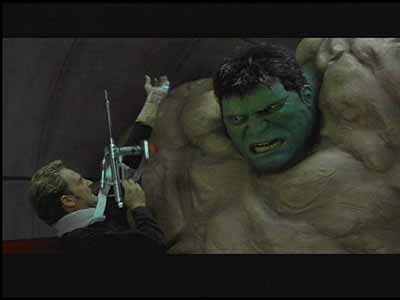
Lee’s big-budget adaptation of "Hulk" works only when it lets the monster everyone came to see get loose on an unsuspecting military and civilian population. Whenever Bana, Connelly, director Lee, the Hulk creature and a small army of CG technicians over at Industrial Arts and Magic try to make viewers care about the emotional turmoil these undeveloped cardboard characters are going through (Ch. 26) "Hulk" fails more spectacularly than the 2003 Chicago Cubs giving away a 3-1 advantage in their MLB Playoff battle with the Florida Marlins. Nothing like watching bullets bounce off Hulk’s thick skin to absolutely kill whatever chance "Hulk" ever had of tugging at the emotional strings of its audience. As PSE2 Magazine editor Zach Meston said in his DVD Watch column a few months back: Gollum in "Lord of the Rings: The Two Towers" is CG done right, and "Hulk" is CG done wrong.
The Disc:
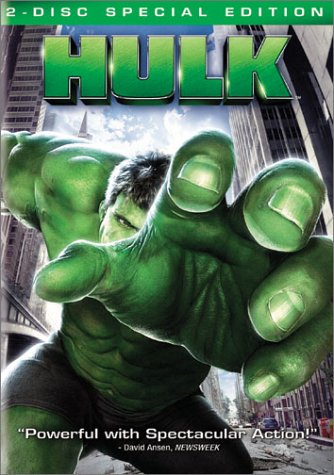
"Hulk" might be a disappointment as a movie, but as a DVD Universal has rolled out bells & whistles worthy of a 2-Disc Special Edition. The movie’s Widescreen Anamorphic (1:85:1) Video Transfer is perfect and pretty much free from imperfections or major blemishes; the sharpness of the picture and deliberately messed-with color palettes are ideal vehicles for Lee’s truckload of visually-interesting (and plot-killing) transitions to be more readily admired for their technical expertise. Since Lee wanted to split the screen into so many separate frames so often I’m surprised he didn’t shoot the film with a 2:35:1 aspect ratio to accommodate more space for each frame-up, but whatever. Three Dolby Digital 5.1 Soundtracks (English, French and Spanish) are as aurally enticing and aggressive as you’d expect from a movie featuring a giant green creature destroying stuff left and right. Dialogue and sound effects are crystal-clear and much more coherent than the soundtrack. "Hulk’s" music, like the lead character, has a split personality that see-saws wildly between Danny Elfman’s score (as anonymous and piss-poor a job as his "Spiderman" score from a year ago; would someone please stop this guy from composing another superhero movie score ever again?) and the sublime Asian chants director Ang Lee wanted to use throughout the movie’s running time (which were replaced by Elfman’s score when Universal executives panicked at the thought of a Western movie prominently featuring Eastern chants).
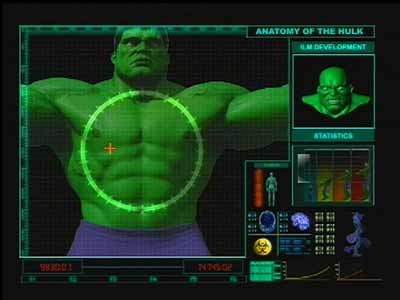
English (Closed Captioning), French & Spanish Subtitles are also included in Disc 1, along with an interesting Commentary Track with Director Ang Lee that makes it clear this is a smart, literate and cultured man that tried (key word there: TRIED) to make a better movie than what "Hulk" ended up being. ‘Hulk Cam: Inside the Rage’ is a feature that takes a page from New Line’s Infinifilm page and allows for access to brief featurettes (most of them dealing with on-location, behind-the-scenes material) when the appropriate icon appears on screen. Seven Deleted Scenes (5:51 min. of consecutive footage) show that they were appropriately excised for sucking (except for Ferrigno’s one-word cameo). ‘Superhero Revealed: Anatomy of the Hulk’ is an interactive look, via CG graphics, to how the character’s massive body stacks-up compared to Bruce Banner’s as determined by the ILM artists that brought the movie character to interactive life; if you wanted to know how Hulk’s shoe size (27) would stack-up with Bruce’s (10 1/2) this useful and fascinating feature is for you! :-( There’s also an extensive Cast and Filmmakers section covering the five principal actors (Bana, Connelly, Elliott, Lucas and Nolte) and nine crew members (including "Hulk" creator and Executive Producer Stan Lee); too bad the background comic book page for all 14 people profiled remains the same throughout the dozens of information pages. Last, and certainly least, there are Sunny D and Earn Free DVD’s promotional advertisements that occupy valuable disc space that could have used for something else (like slightly-sharper picture quality).
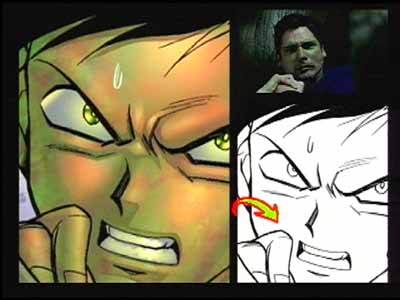
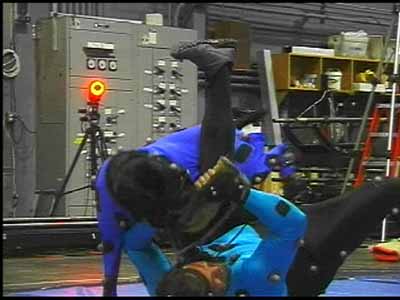
On to Disc 2, home of interesting ‘The Incredible Ang Lee’ & ‘The Dog Fight Scene’ Featurettes (14:27 & 10:09 min., respectively) that show how motion captured technology was used to make Hulk’s movements (made by Mr. Lee himself) and the genetically altered dog attacks more ruthless, raw and powerful. ‘Hulkification’ is the same live-action scene of Banner getting angry with nemesis Talbert as drawn by four renowned comic book artists (Kubert, Ohtsuka, Larroca and Tenada) in split-screen format’ biographies of the four comic book artists are also included. There’s also a Featurette, ‘The Unique Style of Editing The Hulk’ (5:18 min.), that talks about director Lee’s much-mentioned (by me and everyone that has seen the movie) desire to mimic the panel layout of a comic book page. Last (and certainly least), there’s a ‘The Evolution of the Hulk’ Featurette (16:16 min.) that tries to chronicle how the essence of the comic book character has changed in its numerous TV adaptations and different comic book storylines. Compared with more in-depth documentaries about comic book superheroes in competing DVD’s ("Daredevil" and "Spiderman" in particular) this particular "Hulk" featurette is woefully inadequate. A shame considering the Hulk comic books are amongst the best selling and consistently interesting graphic novels on the market, providing a wealth of information the producers of "Hulk’s" featurette fail to exploit.
bottom line:
An expensive experiment at marrying artsy cinema (director Lee’s bread and butter) with pop corn cinema (best suited for a comic premise as absurd as "Hulk’s") that unfortunately pulls itself apart at the seams. As far as comic book adaptations and/or summer action flicks go "Hulk" has enough huge explosions, over-the-top action scenes and good (though not outstanding) special effects sequences to get by. As an ambitious attempt to mine for dramatic effect the plight that a man possessed with a fantastic genetic flaw, his girlfriend and their respective fathers would go through "Hulk" is a complete and total failure. Picture and sound quality do live up the Universal’s high DVD standards (the absence of a DTS track is disappointing though), and the bonus features are interesting; the 2-Disc package’s high-quality standards kept us from rating "Hulk" with the single star the movie deserves.
By - J.M. Vargas
 1/2