I used to be an avid book reader when I was a kid living in the Spanish-speaking banana republic of El Salvador. 'Roots.' 'War and Peace.' 'The Holy Bible (the King James version).' 'Sybil.' 'Greek Tragedies.' 'The Grapes of Wrath.' Shakespeare tragedies (loved that Titus book!). As I've grown older I've gradually lost interest in reading, mostly because it's such a time consuming task and my interests have shifted from fiction to non-fiction material. Blame it on my shortened attention span, digital cable, a shelf with 200+ DVD's and a dozen videogame systems, all clamoring for my undivided attention (not to mention my obligations to PSXNATION and other stuff). But I still remember reading a couple of Virginia Woolf books when I was a kid (which were few because of that pesky English-to-Spanish translation process), namely 'The Voyage Out' and 'Mrs. Dalloway.' I don't think I quite got what 'Mrs. Dalloway' was at the time (I was 12), but that didn't stop me from being fascinated by its account of a woman struggling with her inner torments. I would have to wait 'till College here in the States to discover that the book mirrored the life of its creator, whose mental illness and bouts with depression are well documented.
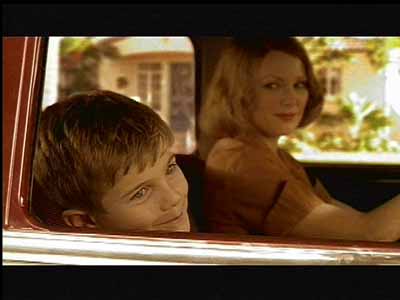
Director Stephen Daldry, screenwriter David Hare and producer Scott Rudin had a tough task when they decided to adapt Michael Cunningham's tribute/homage to 'Mrs. Dalloway,' 'The Hours,' to the big screen. Chronicling the troubled lives of three different women in three different times/places (including 'Mrs. Dalloway' author Virginia Woolf), the movie could have been a jumbled mess of loosely connected stories threatening to overwhelm each other with their wildly distinctive cultural settings/characters. But the storylines are never hard to follow and are actually inter-related in a structure that is meant to surprise moviegoers that haven't read Cunningham's novel. Watch out for the little Richie Brown character (played in the 1951 portion of the film by Jack Ravello), since his importance in linking the two modern-day stories is underscored until its significance toward the end of the film makes for one of "The Hours'" best moments. Editor Peter Boyle makes the stories of the three women in the movie easy to follow, sometimes using a movement in one scene as the transition to another entirely different moment in another woman's era. Sounds hockey, but the important thing is that it works!
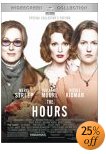
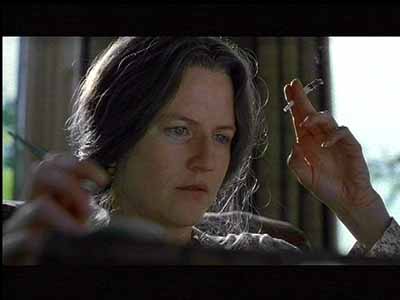
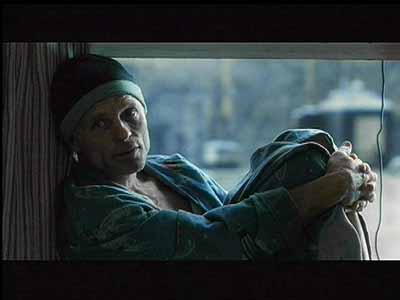
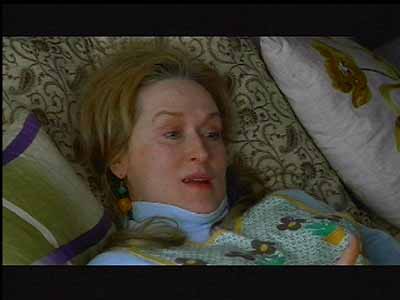
On the assured hands of these filmmakers though, the best asset of the film version of "The Hours" is allowed to shine through: the performances. Nicole Kidman ("Eyes Wide Shut," "Batman Returns," "Birthday Girl," etc.) plays Virginia Woolf circa 1923 as she conceives/executes 'Mrs. Dalloway' to the written word. Julianne Moore ("Boogie Nights," "Hannibal," etc.), looking exactly like the frustrated 1950's housewife she played in "Far From Heaven" (also released around the same time "The Hours" was released theatrically), is dissatisfied-with-her-meaningless-existence Los Angeles housewife Laura Brown. She's reading 'Mrs. Dalloway' in 1951 and using it as inspiration for a potential suicide attempt. Meryl Streep ("Kramer Vs. Kramer," "Death Becomes Her," "Adaptation," etc.) is Clarissa Vaughn, the New York City socialite that tries to organize in 2001 a party for his ailing poet friend Richard (Ed Harris). Clarissa is named after the protagonist of 'Mrs. Dalloway,' and her mundane desire to throw a party triggers indirectly the chain of events that lead to the film's touching climax. All three actresses are their best here, with Kidman's angst-ridden portrayal of Virginia Woolf easily stealing the movie (and the Golden Globe Award and Best Actress Oscar that she won) with her much-publicized prosthetic nose, perfect British accent and distinctive body language.
Backing the trio of AAA leads are stellar guest performances by... (taking a deep breath here)... Stephen Dillane (stellar as Leonard, Virginia's asexual husband/partner), Jeff Daniels (Clarissa's poet friend Louis Walters), John C. Reilly (perfect as Laura Brown's clueless husband Dan), Miranda Richardson (deliciously wicked as Virginia's sister, Vanessa Bell), "The West Wing's" Allison Janney (Clarissa's partner Sally Lester), "Muriel's Wedding's" Toni Collette (Laura Brown's next-door neighbor Kitty), Claire Daines (touching as Clarissa's teenage daughter Julia) and many, many more. Production values back-up the illusion that these women are living in their respective time periods, and at 115 min. the film (which at times can feel a tad over plotted and boring) mercifully ends at just the right moment. The absence of any humor whatsoever (intentional or unintentional) makes this a hard film for easily bored or sleepy viewers to sit through. Only during one scene (Ch.16) in which a character tells Meryl Streep's Clarissa something to the effect of 'the worse thing a mother can do is to abandon her children' (an veiled references to Streep's Joanna Kramer character in the 1979 film version of "Kramer vs. Kramer") does the film come even remotely close at winking at nodding at the audience.
The only negatives I can think of about "The Hours" is that its weaknesses are typical fodder that most critics harp on when they refer to this as the 'chick flick' it actually is. Male characters are either battered-by-trauma weaklings (Ed Harris' Richard) or simpletons that can't see the pain their women are going through (John C. Reilly's Dan and Stephen Dillane's Leonard). The bisexuality/homosexuality of the women also implies a simpler solution/predicament to their rather well off lives. Their trouble is inside their heads, and that makes for a juxtaposition to their otherwise decent existence that doesn't strike me as too negative a situation. Other than those caveats though, "The Hours" is top-notch quality Hollywood drama at its most literate and best-performed.
The Disc:
Presented in
Dolby Digital 5.0 & French Dolby Digital 2.0 Surround (no need for that extra .1 'oomph' when a movie is as dialogue/music-driven as this one), "The Hours" is a pleasure to listen to. Superb dialogue by screenwriter David Hare (itself inspired by Michael Cunnigham's literate novel) and one of minimalist composer Philip Glass's best musical scores to date work in tandem to make this movie a most exquisite aural delight. I'm listening to "The Hours" score as I type this, and I'd have to say this is my second-favorite Glass soundtrack (behind "Candyman") ever! The DVD's
Widescreen Anamorphic (1:85:1) Video Transfer preserves cinematographer Seamus McGarvey's uncanny ability to shoot three different stories in different time periods that look remarkably different (natural shadows for Woolf's 1920's segments, glossy Technicolor-like hues for Laura Brown's 1950's world and the cold desolation of an urban landscape in Clarissa Vaughn's 2001 NYC world). Unlike "Superman: The Movie" though, there is a thread of visual compatibility between the three stories that gives "The Hours" the visual consistency it needs to cut from one story to the next without jarring the audience's senses that they're watching a single movie.
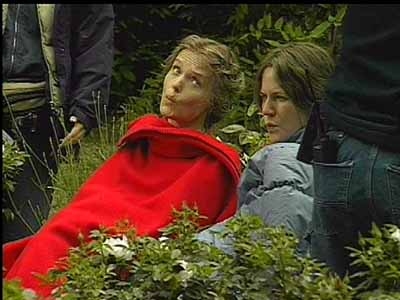
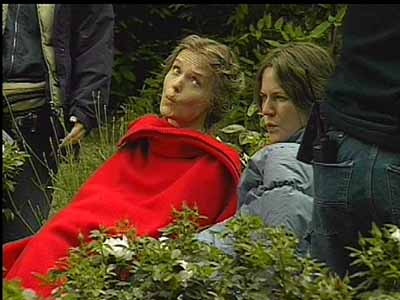
English Subtitles and Theatrical Trailers (for "The Hours" and "How To Lose A Guy in 10 Days") are also included. A Filmmakers Introduction (2:05 min.) gives director Stephen Daldry a chance to introduce himself and his baby. Two Commentary Tracks reunite the trio of lead actresses (Kidman, Moore and Streep on track #1) as well as the director and author of "The Hours" novel (the aforementioned Daldry and Cunningham). Those DVD commentary whores expecting the former to be chatty and informal and the latter to be sleepy but informative will be half-right; both commentary tracks are serious and follow the film's no-fun-whatsoever policy to a tee. Much better and informative are the four featurettes Paramount Home Video commissioned for this DVD release. Two of them are production related. 'Three Women' (15:56 min.) chronicles with behind-the-scenes footage the work of the three leading actresses in their respective roles, while 'The Music of The Hours' (7:09 min.) gives Philip Glass and the producers of "The Hours" a chance to impress upon the viewer how hard it was to score this movie (many conventional movie soundtracks were commissioned and rejected).
Much more interesting are the two featurettes about the life and work of British writer Virgina Woolf. 'The Mind and Times of Virginia Woolf' (24:36 min.) gives scholars and biographers familiar with the author's work a chance to explain to viewers of "The Hours" DVD the background that led to the author's mental illness and eventual suicide (both integral to the plot of the movie). On par with an A&E Biography special, this is interesting stuff that's definitely worth a look (particularly if you're familiar with Woolf's written words). 'The Lives of Mrs. Dalloway' (9:42 min.) gives "The Hours" novelist Michael Cunningham and screenwriter David Hare a chance to expand upon how the Woolf book both inspired "The Hours" novel as well as took a significant role in the movie itself. A little boring (especially after seeing the previous featurette about Virgina Woolf), but compelling nevertheless.
bottom line:
Don't rent (or buy) "The Hours" expecting it to entertain or cheer you up with its suicide-prone characters and depressing narratives. The desperate inner turmoil of three different women at three different times (and the people surrounding them) doesn't make one stand up and cheer. Instead rent (or buy) "The Hours" to see a veritable small army of marquee actors/actresses (Kidman, Streep, Moore, Richardson, Collette, Harris, Daniels, Janney, Daines, Reilly, etc.) at the peak of their craft, as well as a team of scriptwriters/crew members capturing their many priceless moments together (or alone). Decent picture/sound transfers and the right amount of special DVD features make "The Hours" that rare Hollywood drama that doesn't insult your intelligence on repeat viewings.
By - J.M. Vargas